Voicing
Unlike many other wind instruments, the oboe relies only on voicing and the pitch of the reed to adjust intonation, making it more comparable to singing.
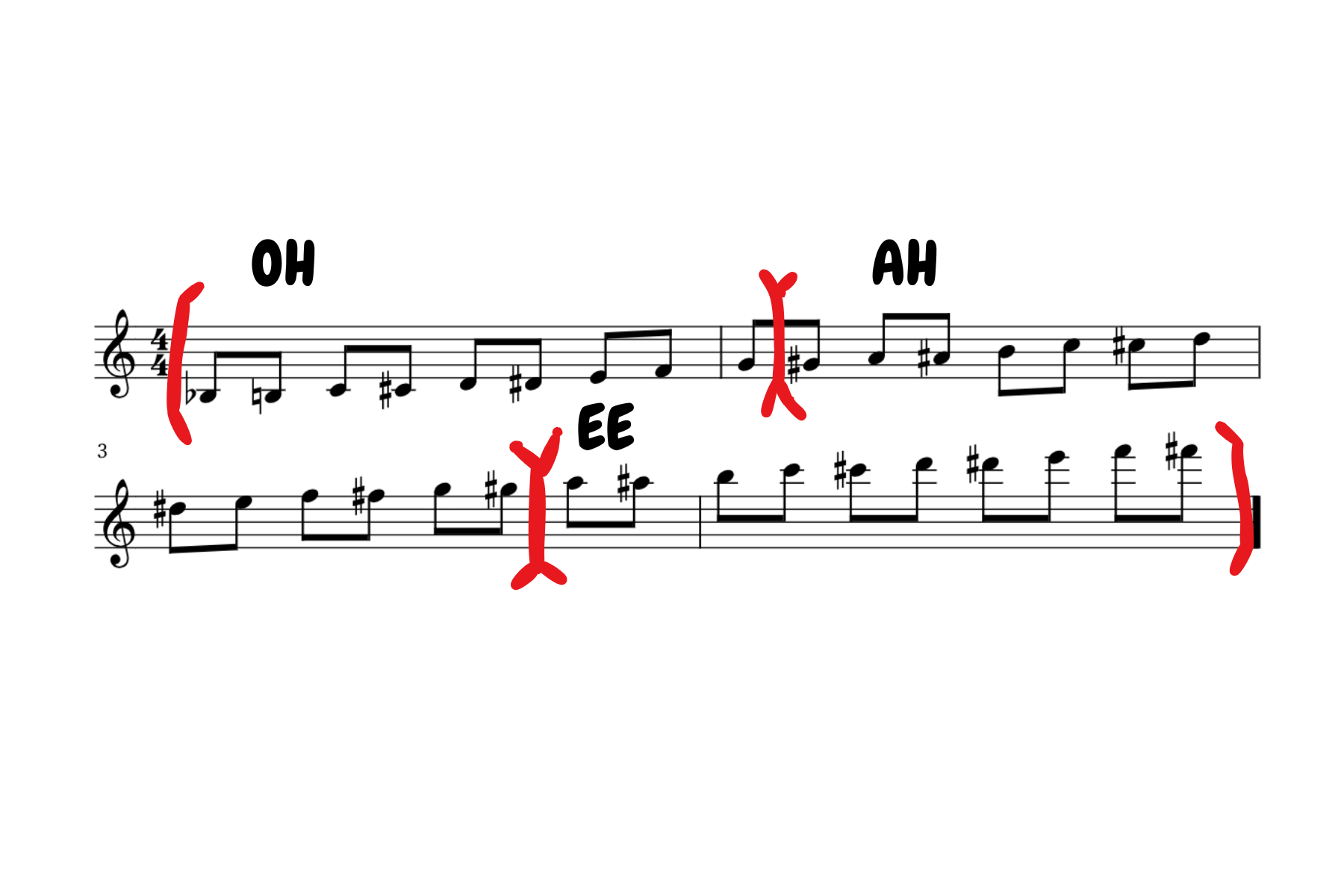
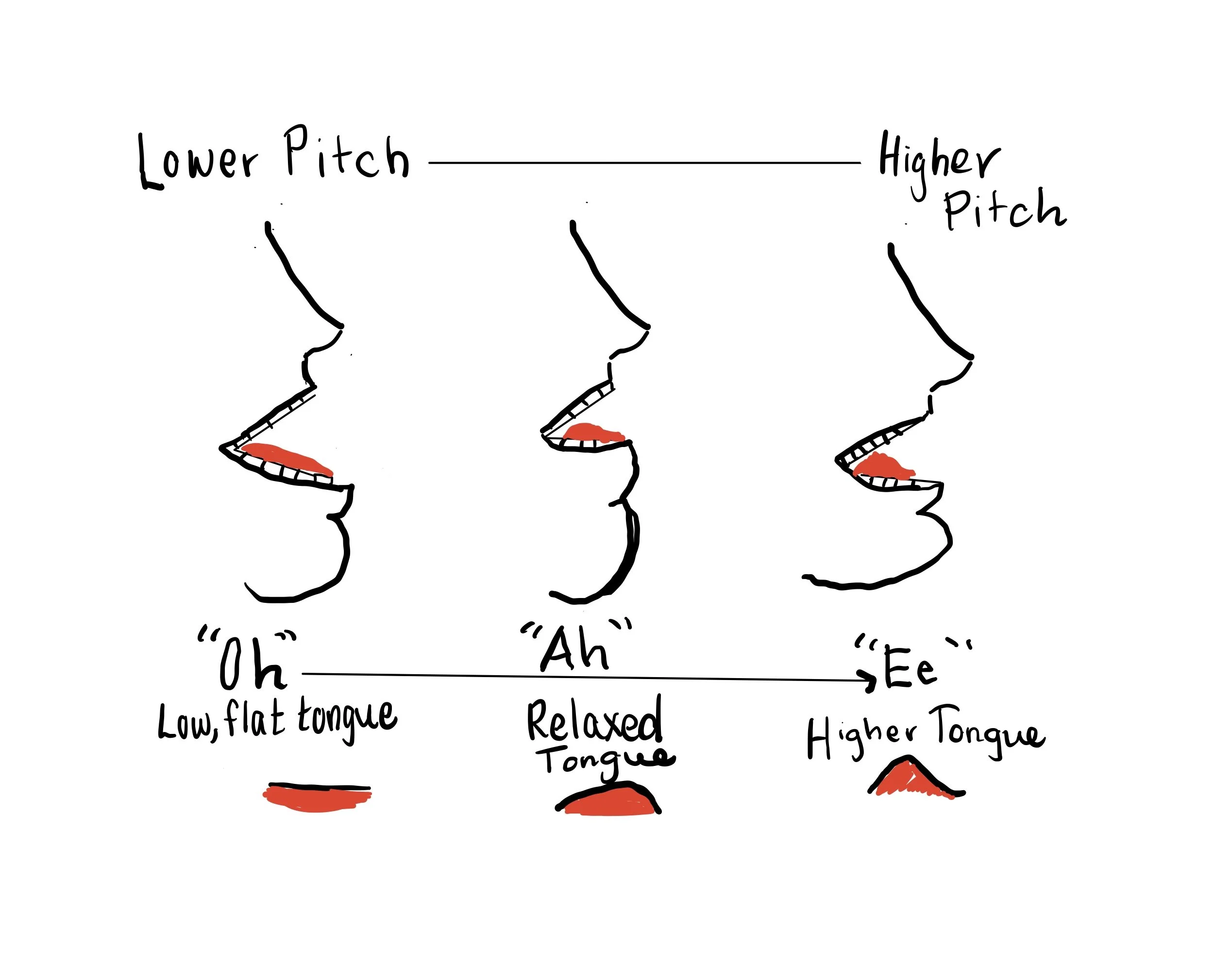
Each register uses its own unique syllable to create the correct shape in the oral cavity. In general, low notes have more OPEN voicing and high notes have more CLOSED voicing.
Voicing help our air move at the correct speed. When the oral cavity is larger, the air moves more slowly, creating lower frequencies of sound. When the oral cavity is smaller, air is compressed and moves more quickly, creating higher frequencies.
Consider the Following. . .
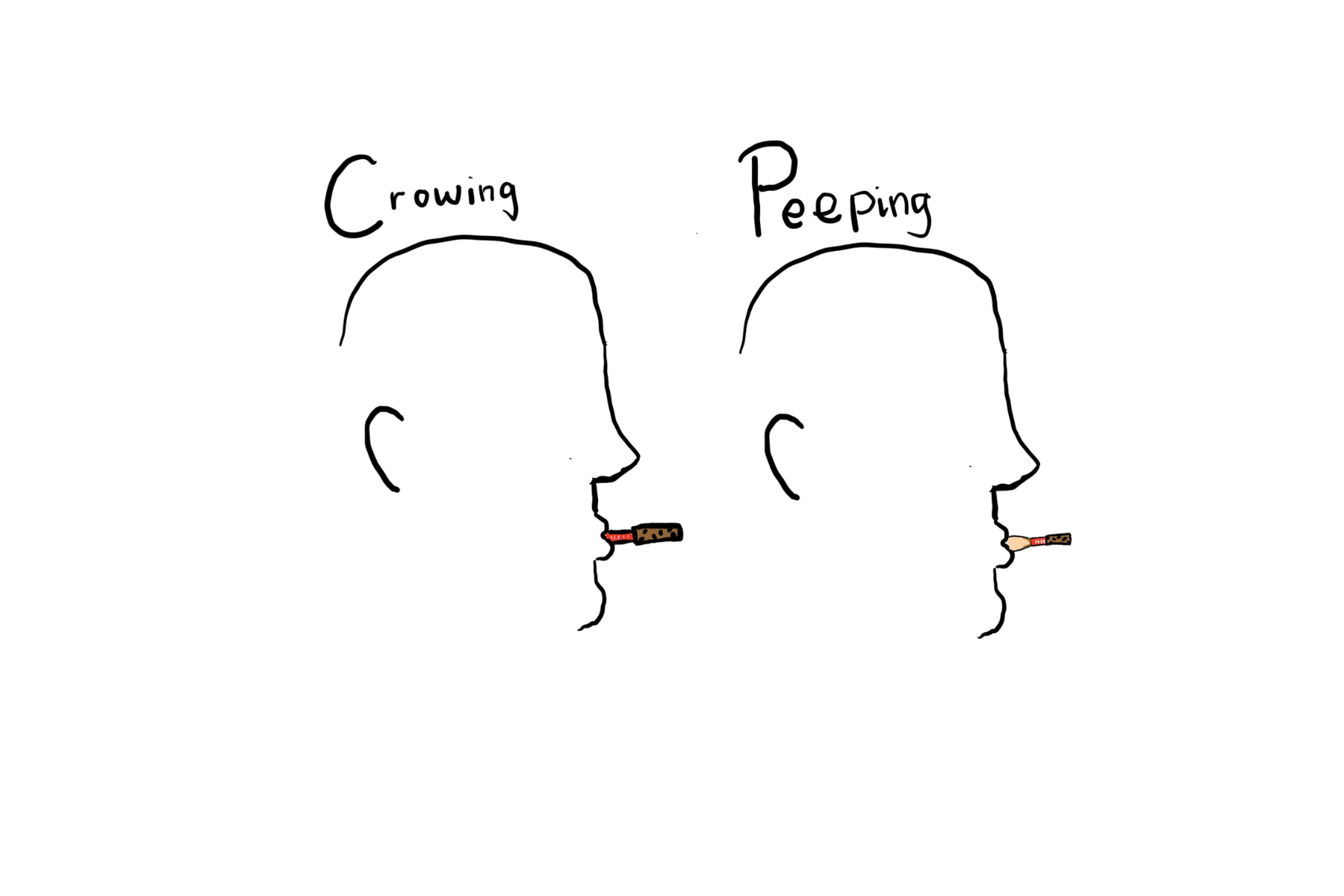
Crowing: Slow air blown at the thread, produces multiple pitches, used to evaluate the reed ONLY
Peeping: fast air produced in playing position, creates one pitch, used for tuning and checking voicing.
Voicing and Reed Placement
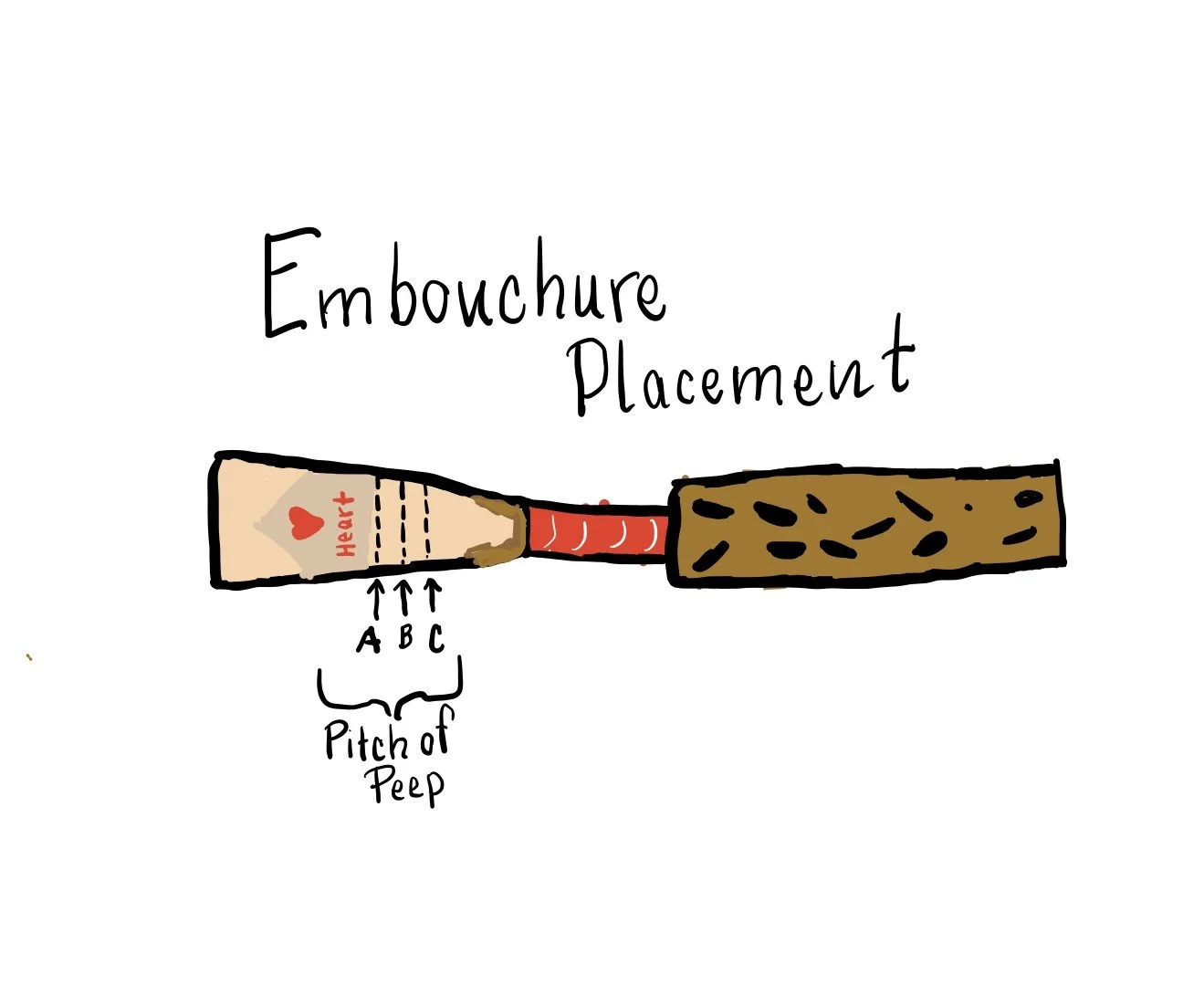
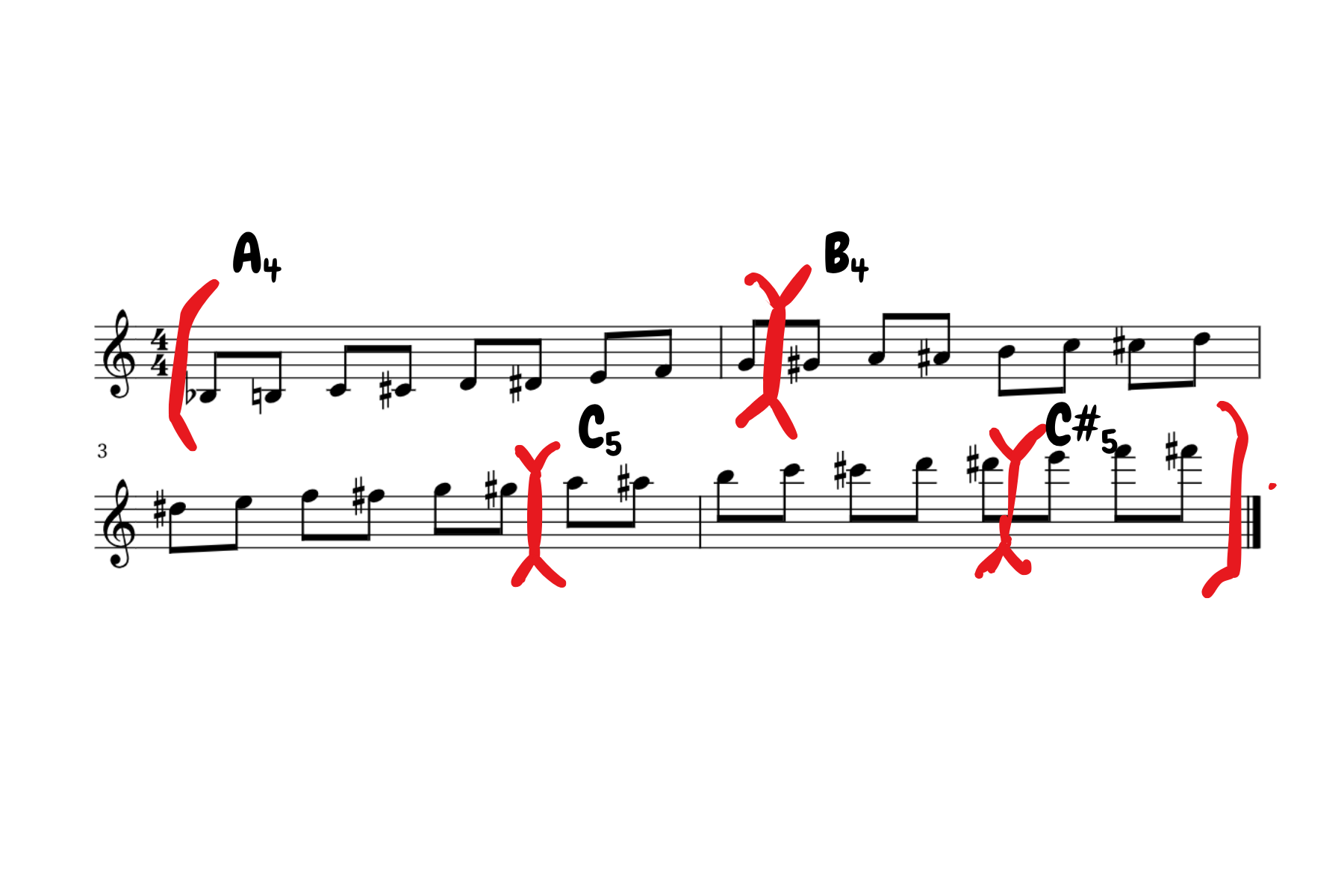
In addition to voicing, the amount of reed you place in your mouth directly affects your pitch. When you blow on the reed by itself in a playing position, it produces a fundamental pitch known as a “peep.” This peep is the core sound that gets amplified by the body of the oboe.
Just as with voicing, each register of the oboe relies on a different principal peep pitch. To adjust this, simply shift how much reed is in your mouth without changing the shape of your embouchure.

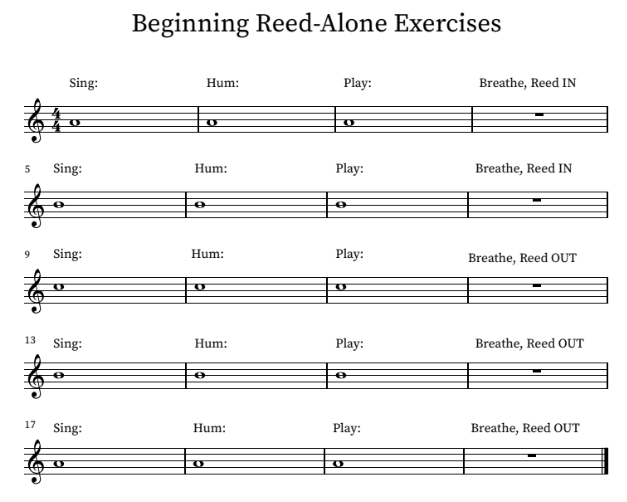
Developing a stable, resonant tone starts on the reed alone. Students should hold the reed lightly at the cork using their thumb and index finger, keeping the hands relaxed and preventing any pressure on the cane. Adjusting how much reed enters the mouth alters the fundamental pitch, training the micro-adjustments needed to navigate the oboe’s different registers while keeping the lip cushion completely steady.
To build this control, students practice a simple four-step routine, Sing, Hum, Play, and Breathe, over a C Major backing track or drone. Singing and humming first engages audiation and pre-sets the vocal tract to the target pitch. On the fourth beat, students take a full breath while mak
Ultimately, isolating the reed over a harmonic drone eliminates the urge to force pitch with jaw pressure. It teaches beginning oboists that pitch flexibility comes from airflow, oral cavity shape, and precise reed depth.
Reed-Alone Exercises