
Air Usage and the Oboe


Air is key!
Like many instruments, oboists manipulate air in order to adjust things like volume, intonation, and tone color. Each element plays a special role in creating a great sound
Three Elements of Air
The Three Pillars of Air Control
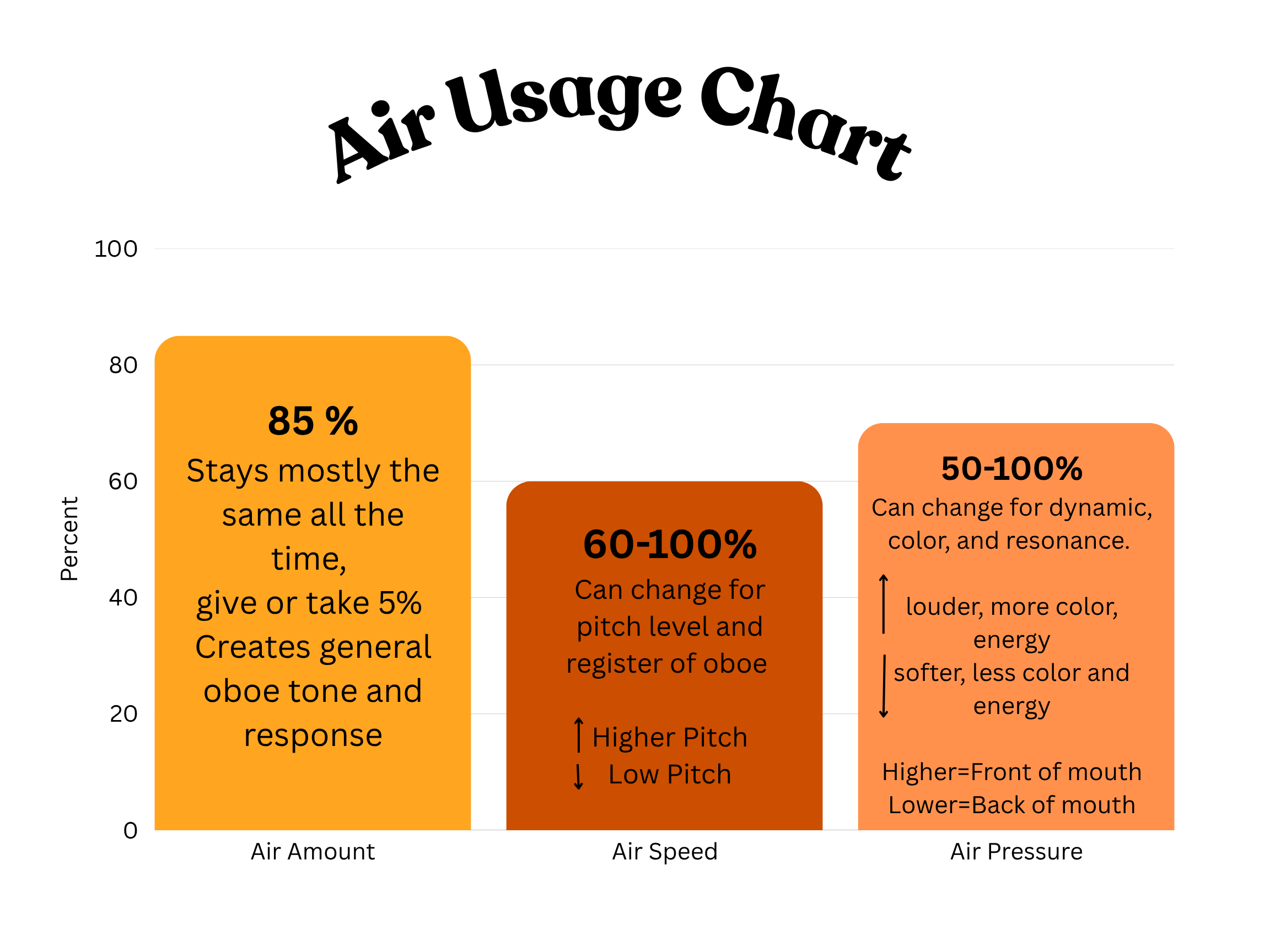
Air Amount (Volume): Controlled by deep inhalation and steady release, airflow originates deep in the body (the abdominal cavity and diaphragm area) to provide a constant, supported stream.
Air Speed (Velocity): Refers to how fast the air travels from deep within the body up through the vocal tract and into the mouth. Faster air speed creates vibrancy and helps higher notes speak effortlessly.
Air Pressure (Placement & Voicing): Determined by where the air is focused inside the mouth. Moving the tongue higher and forward toward the front of the mouth increases air pressure, while dropping the tongue toward the back decreases pressure.
How Air Changes with Register
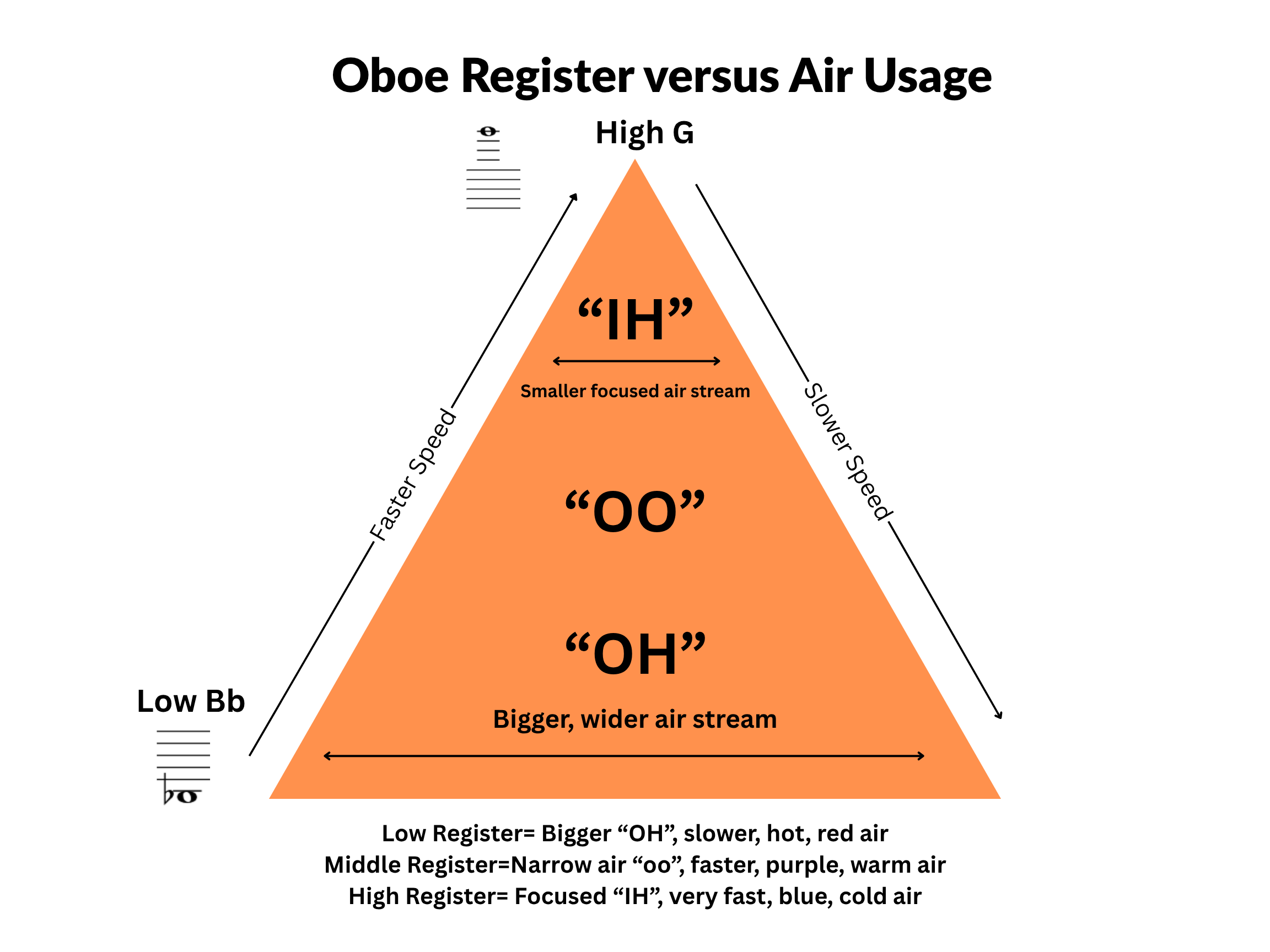
This chart shows how students should change their inside-mouth shape and air speed as they play across the oboe's range. Beginners often try to play high or low notes by biting harder on the reed. Instead, they should control the sound from inside their mouth. For the lowest notes like low Bb, have students form an "OH" shape. Think of this like fogging up a mirror with slow, warm, relaxed air. This open space keeps the bottom notes from honking or cracking
As students climb toward high G, their oral cavity should narrow from "OO" to "IH". This syllable change naturally raises the tongue and speeds up the airflow. Instead of broad, warm air, the airstream becomes a laser-fast, focused beam. Visualizing this shift from warm, slow air to fast, cool air helps upper notes speak easily without pinching the embouchure. Prompting students with these simple vowel syllables will quickly fix tone and pitch issues across the entire band room.