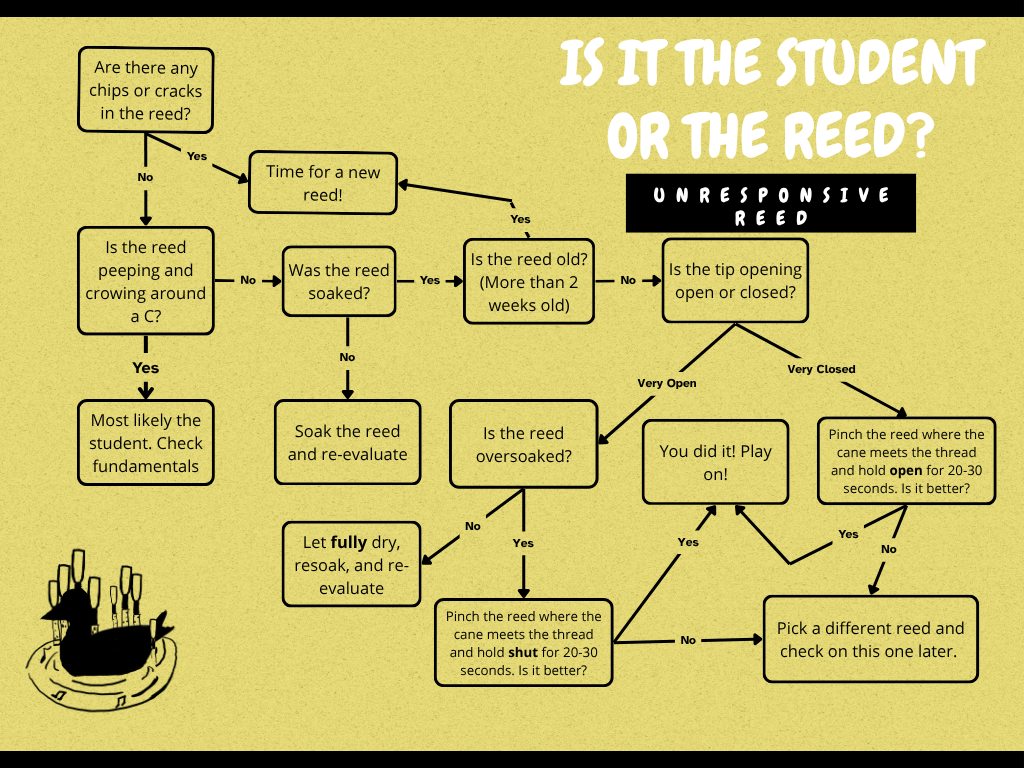
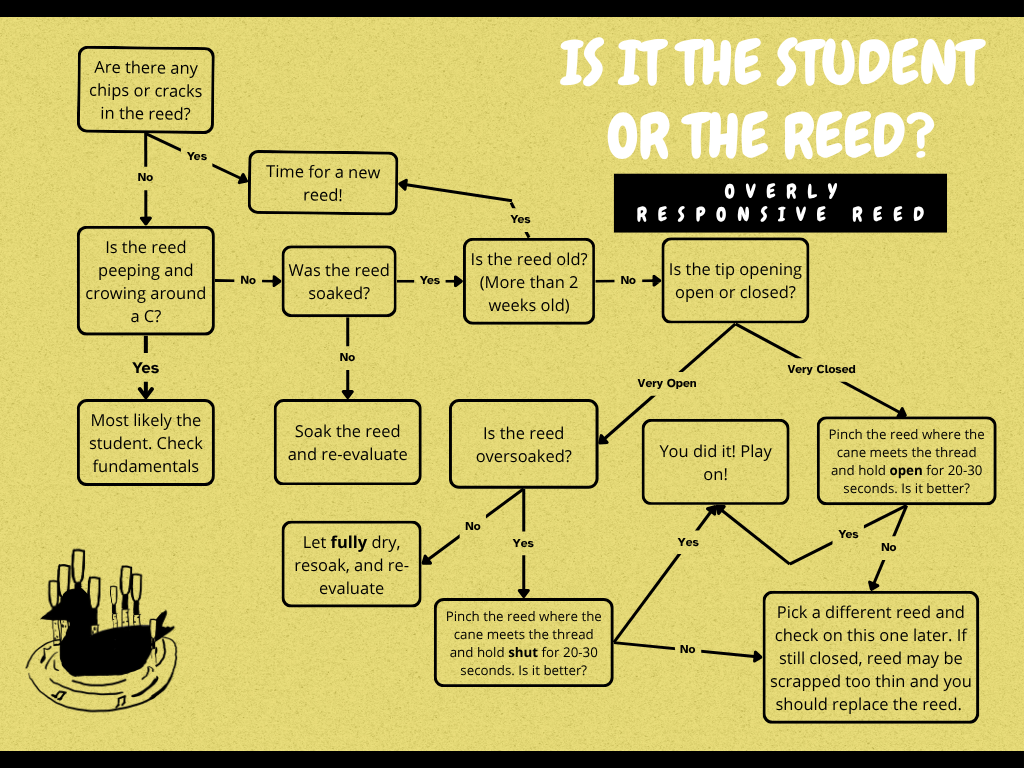
Reeds often pose more questions than answers while teaching students how to produce sound. However, reeds don’t have to be a mystery when you know to look for the right things. Reeds are made of organic materials that are easily affected by changes in temperature, humidity and elevation. Finding reeds that fit your environment can benefit your students greatly.
What’s up with these reeds?


Anatomy of a Reed
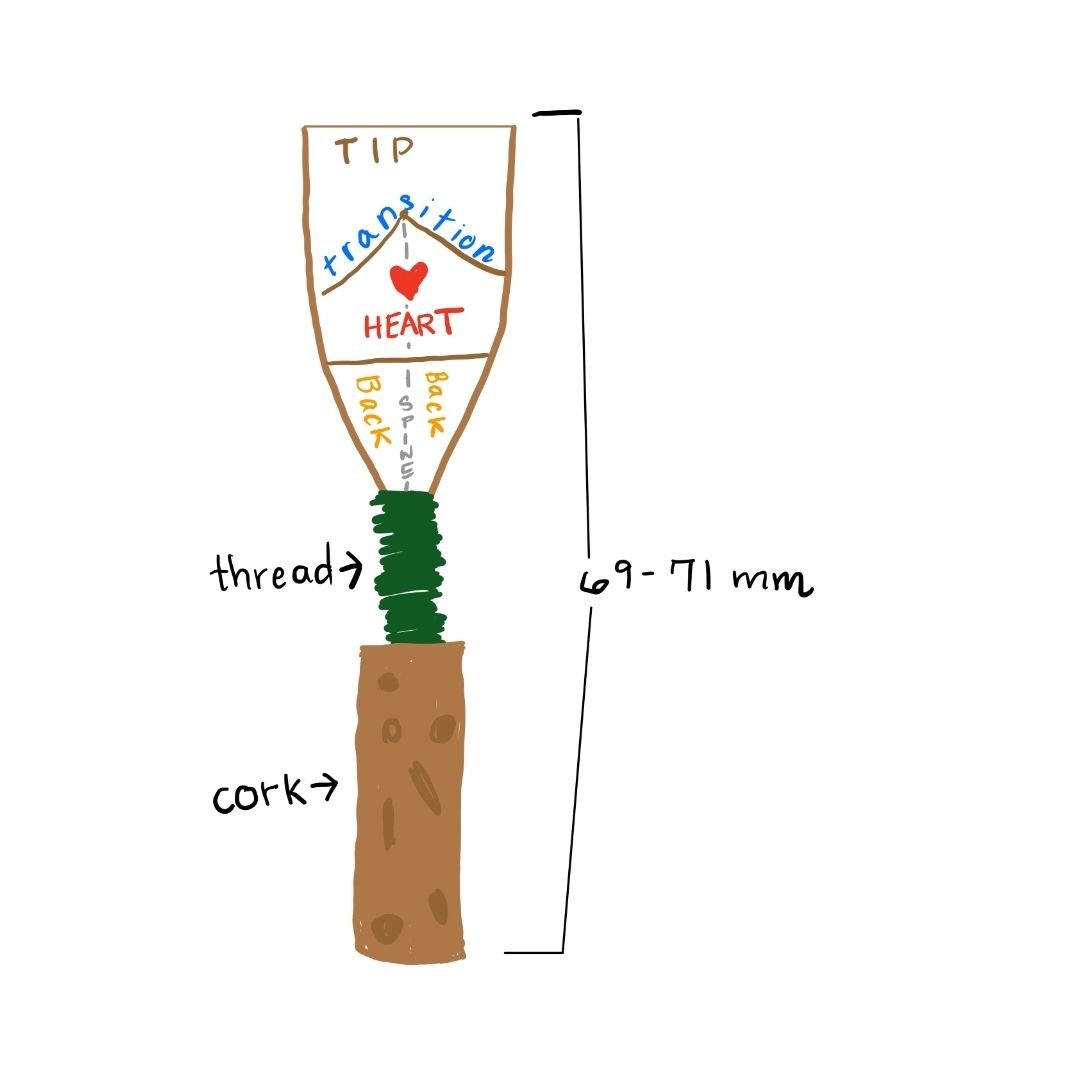
Click to find out more about each part of an oboe reed!

-
The tip is the thinnest, most delicate portion at the very top of the reed, making it the absolute most important section for overall function. It directly controls the reed's initial response and structural stability, dictating how easily the instrument speaks. Because it initiates the vibration, small adjustments here drastically alter how resistant or free-blowing the reed feels for your students.
-
Located just below the tip, the transition (or the "blend") is the slope where the thick heart meets the thin tip. It acts as a bridge that significantly impacts response while heavily controlling the overall warmth and focus of the tone. A well-scraped transition ensures a smooth connection between registers, preventing the sound from becoming brittle or overly harsh.
-
The heart is the thicker, central area of the cane located directly below the transition. This section acts as the primary acoustic anchor, controlling the pitch center and providing the structural core of the reed. If a student is constantly flat or struggling with a saggy, unstable pitch, the heart is often too thin or lacking the proper cane density.
-
The back comprises the lower portion of the scraped cane, leading down toward the thread. This region acts as a resonator that helps add depth, warmth, and resonance to the overall sound quality. While it doesn't initiate the vibration, a properly balanced back opens up the lower harmonics, helping the lower register speak more freely.
-
The spine is the central ridge running vertically down the center of the reed, primarily visible through the heart and back sections. It serves as the reed's structural backbone, maintaining the necessary tension and opening of the tip. Without a defined spine, the reed will collapse under embouchure pressure, causing the sound to choke out or go wildly sharp.

American vs. European Reeds
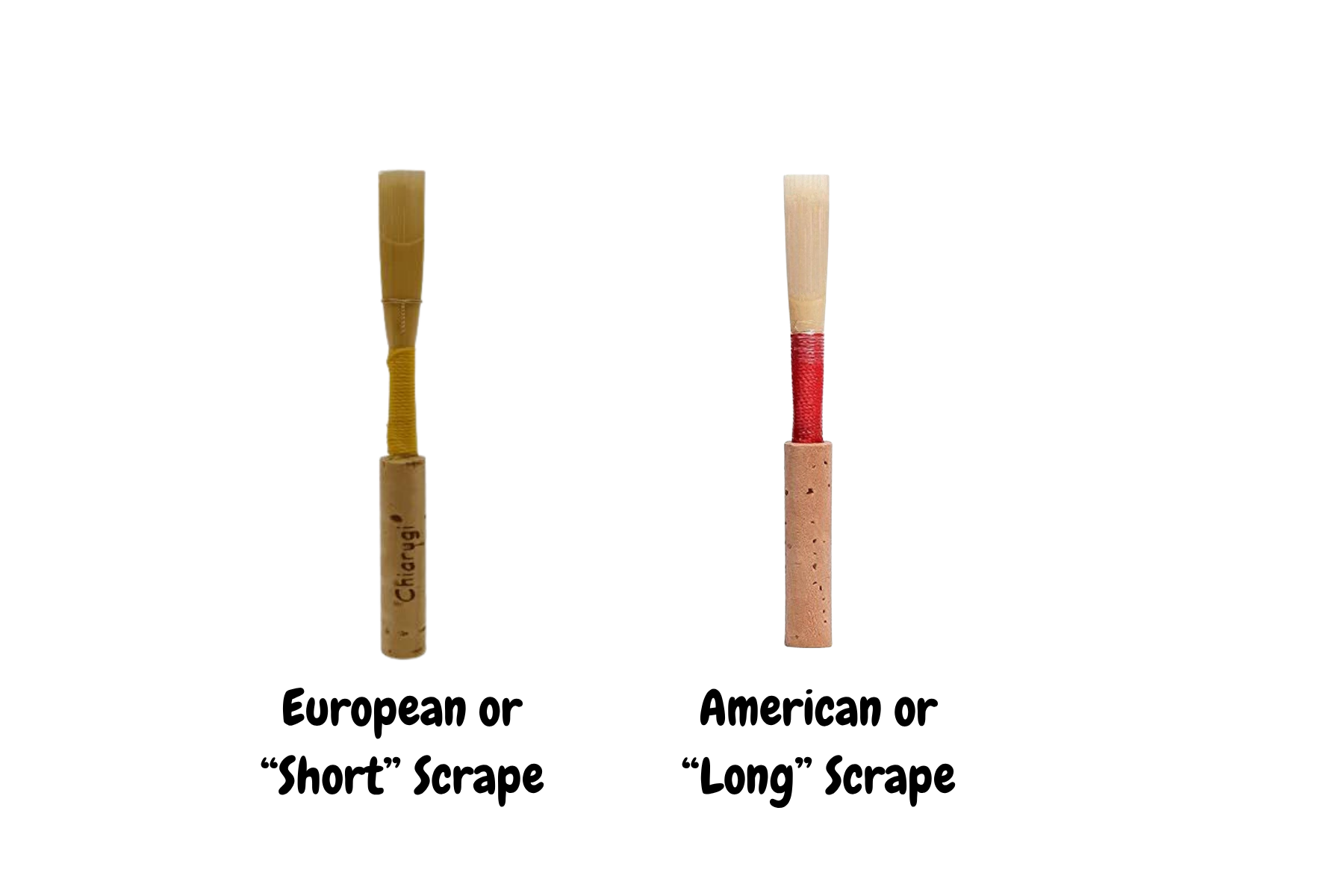
Please look carefully before purchasing oboe reeds online! Many commercial retailers (like Amazon) primarily sell European style scrape reeds. These reeds often feature a metal wire around the blades and have a very thick layer of bark left on the back. They require a completely different embouchure (lip placement) and will prevent your student from making a good sound or playing in tune. All students must use American-scrape reeds—see below for recommended vendors.

Where should I buy reeds?
Local Reed Maker
When possible, buying from a trusted local reed maker is the ultimate win. Not only do you get a reed made for your local environment, but you also gain a partner who can fine-tune reeds to match your student’s exact stage of learning!
Reed Making Businesses
Online double-reed vendors are great to have in your back pocket! While handmade reeds ordered from afar can occasionally vary in consistency due to shipping and climate changes, specialized online shops are still a world better than mass-produced retail reeds. You also have the option to choose a vendor in a similar climate

Major Double Reed Retailers
Specialty shops offer reeds from top makers all over the country, which is great, but it can make choosing the right fit tricky! Since every maker crafts reeds differently, finding the perfect match for your student is a personalized process.

Quick Fixes
No tools necessary!