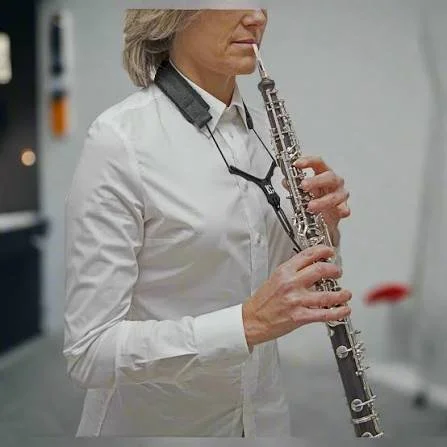
Playing Posture
While the fundamentals of good posture are largely universal across all instruments, certain oboe-specific alignment details are crucial. Mastering these nuances not only helps build a rich, characteristic oboe sound, but also ensures healthy ergonomics for a lifetime of pain-free playing.
Hand Position
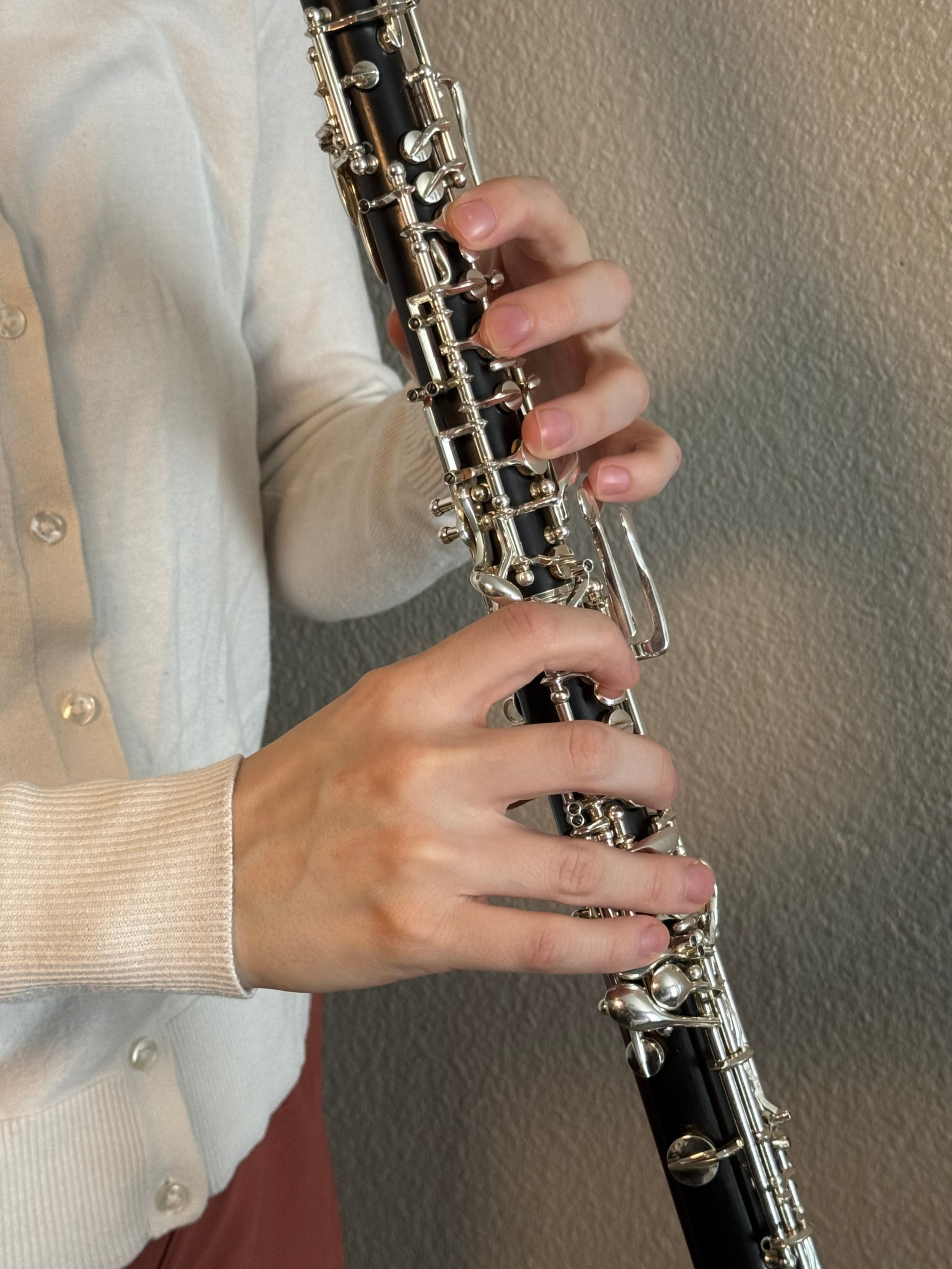
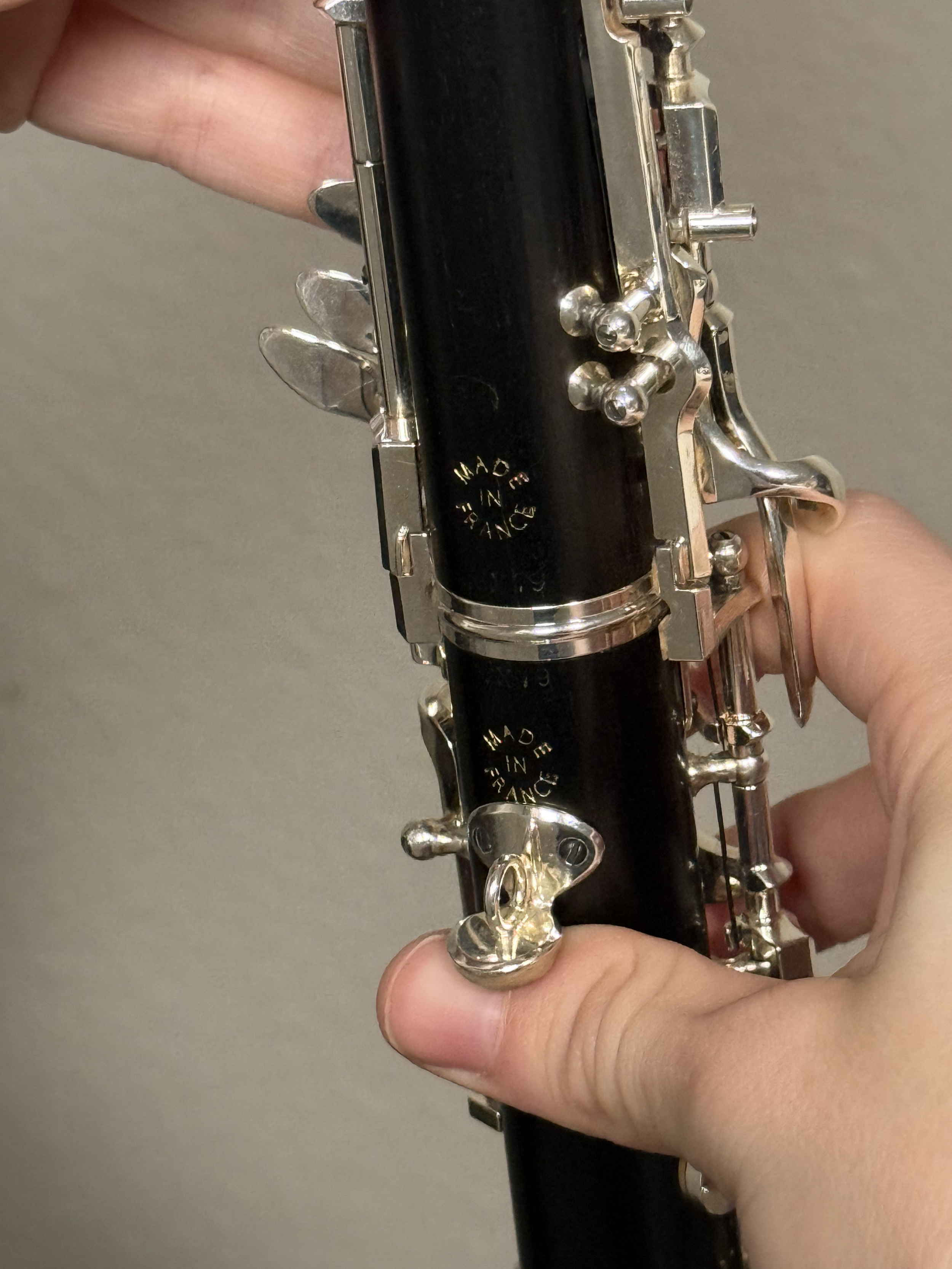
Proper Hand & Thumb Placement
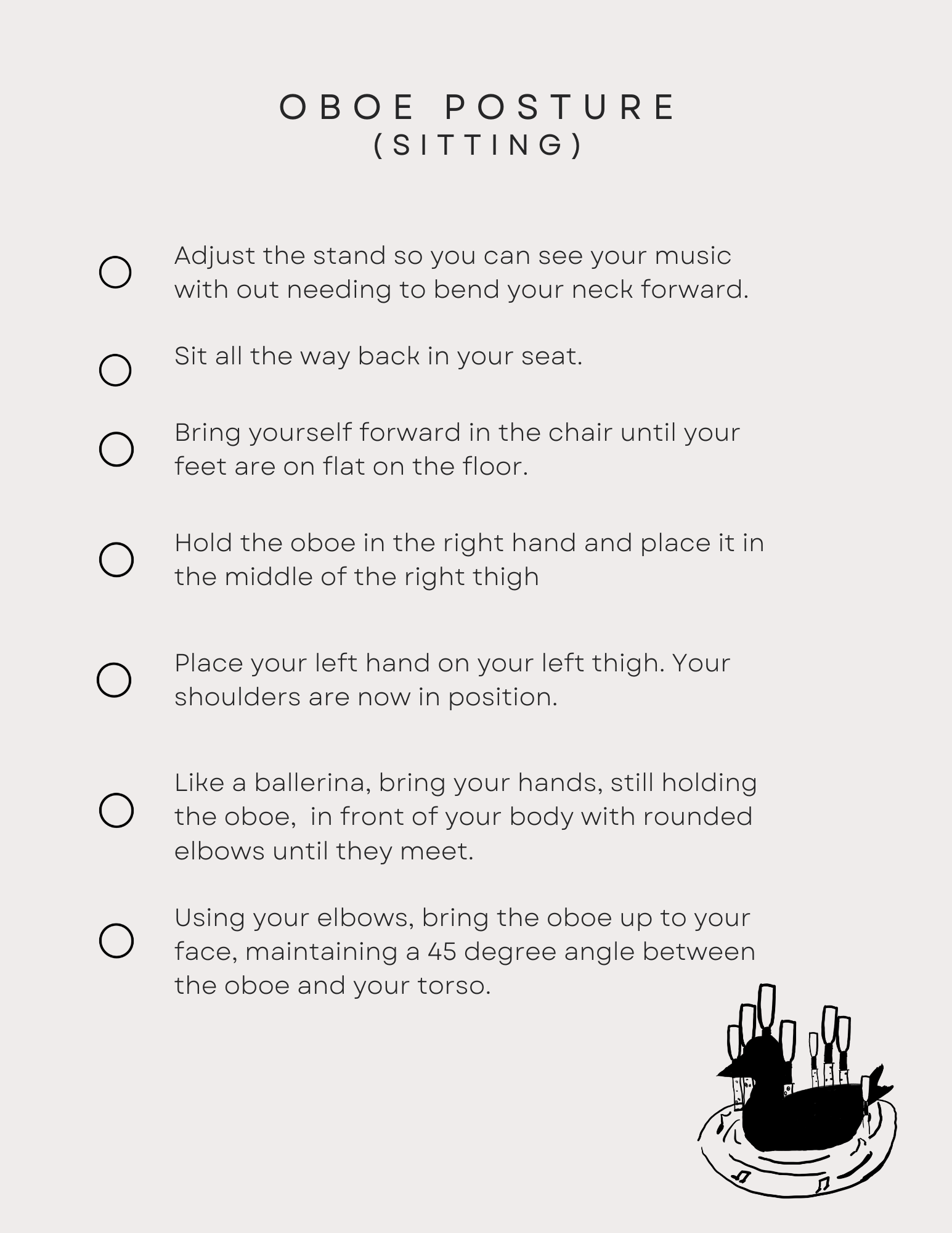
Left Thumb Position: The left thumb should rest directly below or lightly touching the octave key, ready for immediate use. Avoid placing the thumb too far below the key, as this extra distance slows down key movement and technique.
Right Thumb Position: The right thumb supports the main weight of the oboe. Position the thumb rest at the tip of the thumb, just before the first knuckle joint. Be careful not to slide too much thumb under the rest, which can cause a restrictive “claw-like” hand shape and impede finger speed.
Curved Fingers & Soft Joints: The fingers should maintain a natural, relaxed curved shape. Avoid flat fingers or collapsed joints, which create tension and restrict finger speed.
Hovering Finger Placement: Keep the finger pads close to the keys at all times, hovering just above the tone holes.
Relaxed Wrists & Open Ergonomics: The wrists should remain neutral and straight, aligned with the forearms rather than collapsed inward or bent upward.

Horn Angle
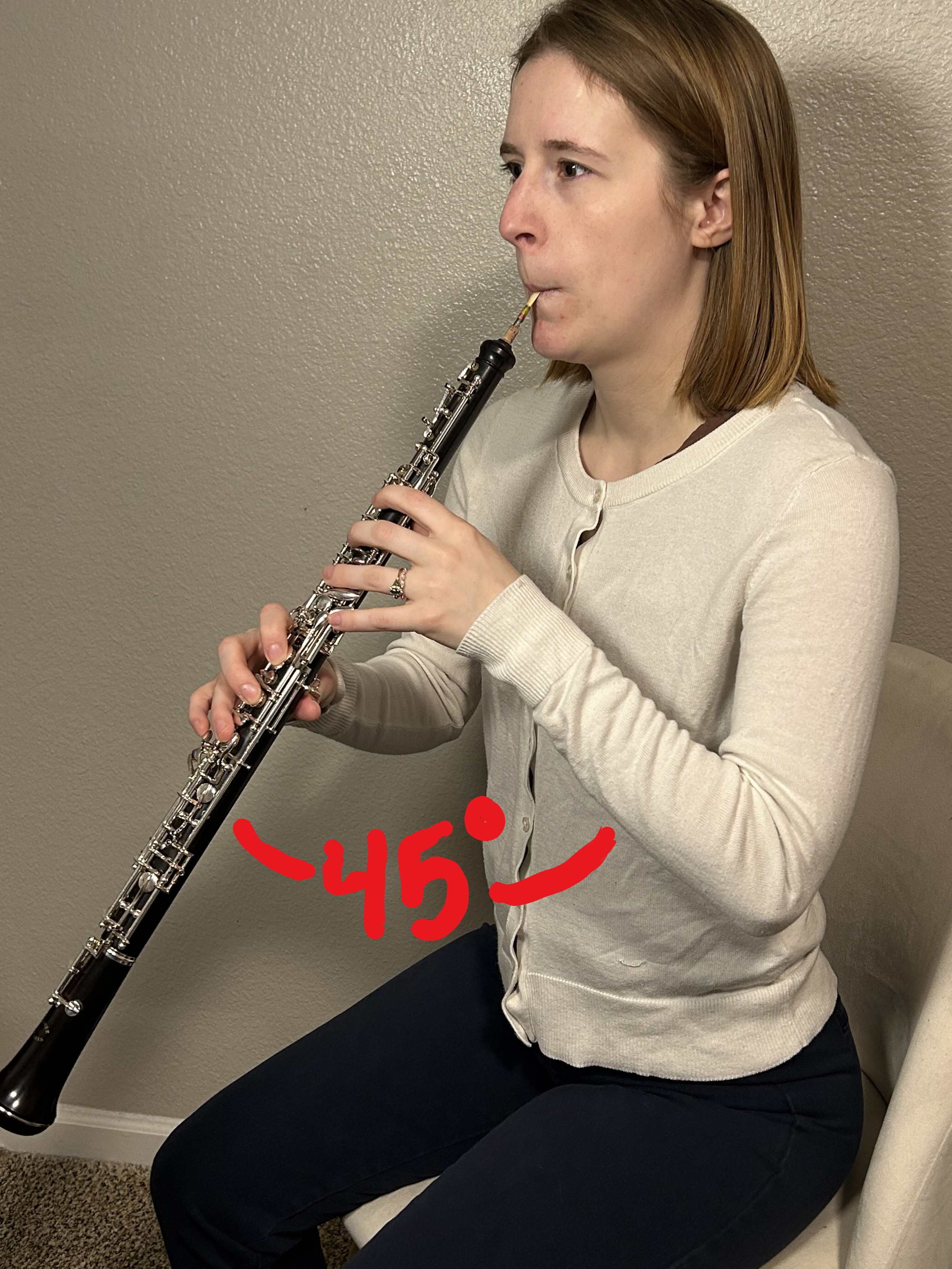
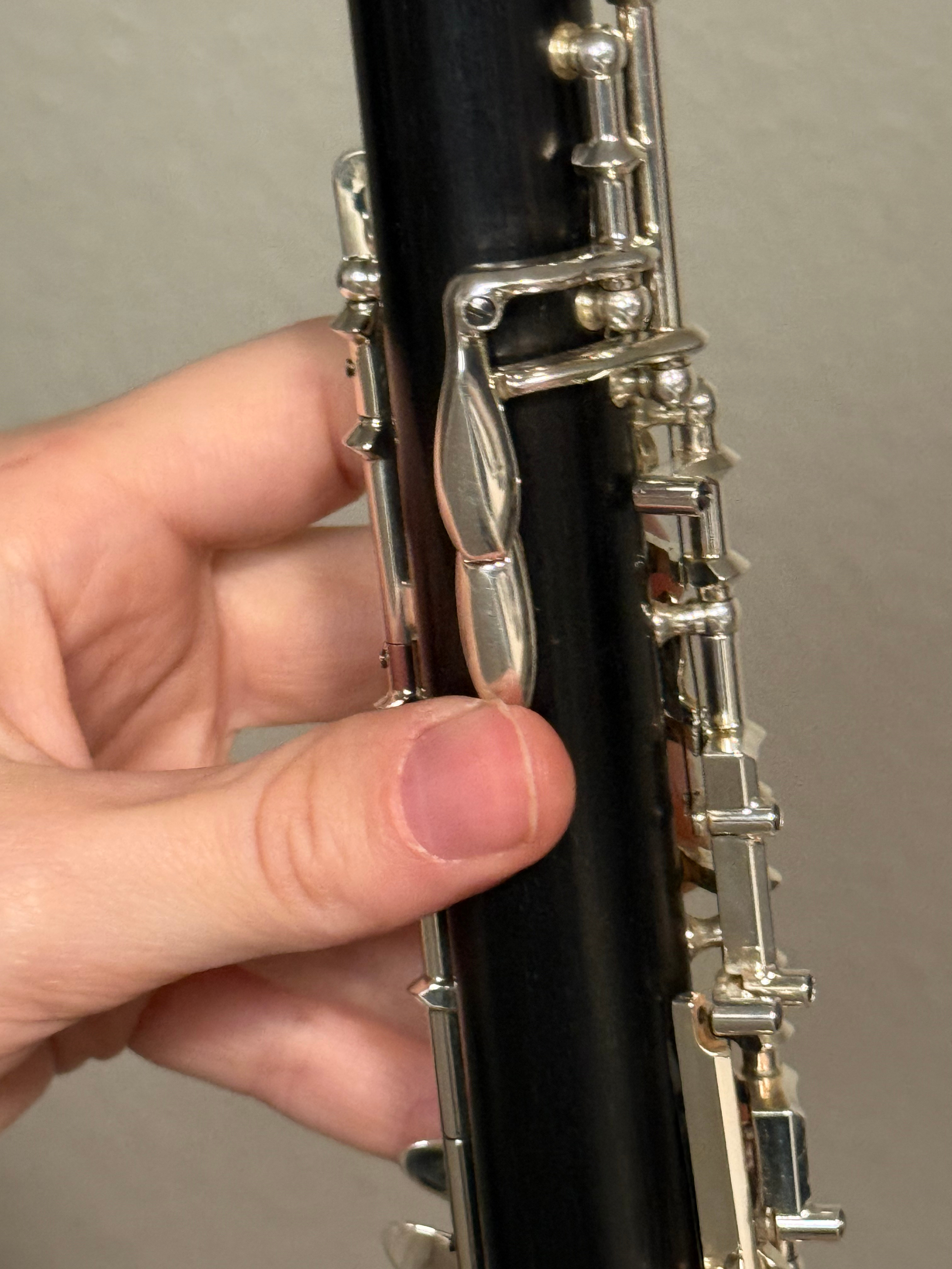
Finding the Correct Oboe Angle
One of the most common mistakes students make is holding the oboe too close to their body. A shallow instrument angle pushes the bottom reed blade too far into the lower lip, dampening vibrations and producing a thin, pinched sound. It also introduces unwanted physical tension that slows down finger technique.
Conversely, holding the oboe too high directs the airflow too straight into the reed. This can result in an overly bright, wild tone that lacks focus and control. Finding the ideal 45 degree angle ensures a balanced, resonant sound while maintaining comfortable hand ergonomics.

Posture Aids
The oboe can be heavy for younger and smaller students; especially during an hour-long rehearsal. There are a few posture aids that can help alleviate some discomfort while the student builds the muscles to hold the oboe for longer periods of time.
DO NOT have the student rest the bell of the oboe on their knee. This is is a difficult habit to break and can create other posture issues.
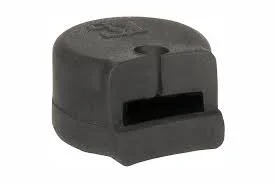
DO have students use neck straps, thumb cushions, and other posture aids. These are designed to help students maintain aligned posture and take some weight off the right thumb.